

On 'Sentimental Value' and On How It Brought me Closer to my House
Reflections on the film, and the blurry line between my life

The basic unit of a house is not cement or wood. It is a graveyard. And this is how the film ‘Sentimental Value’ opens. A serene cemetery brimmed in the deeper shades of green, as the sunlight also brimming, cautiously fingers into the land. The camera then, almost instantaneously, ponders over the grand Borg’s house hammered among the bushes. The house is red in colour, and that remains the only thing you can get out of it.
I remember once in second grade, a friend who was weak with time and years, would figure the age of a house by asking how many people died between its walls. I would always falter in answering. How many were even there actually? two? seven? thirty nine—? Even my father couldn’t climb his memory on that, because somewhere we weren’t allowed to remember such numbers, just like we weren’t allowed to count the mangoes we ate or the pages left in our Quran to complete. Doesn’t mean those numbers never existed. It was only that the umbilical cord between the brain and tongue was made to be constrictive. What we thought, we could not speak; whatever we spoke, others spoke before us. One day, I was seven years old, and the other day, the house forced its age on me. I know what the house did to everyone. In the morning, I watched Ama open all the windows from the clamp and sit on whichever surface she saw, and breathe.
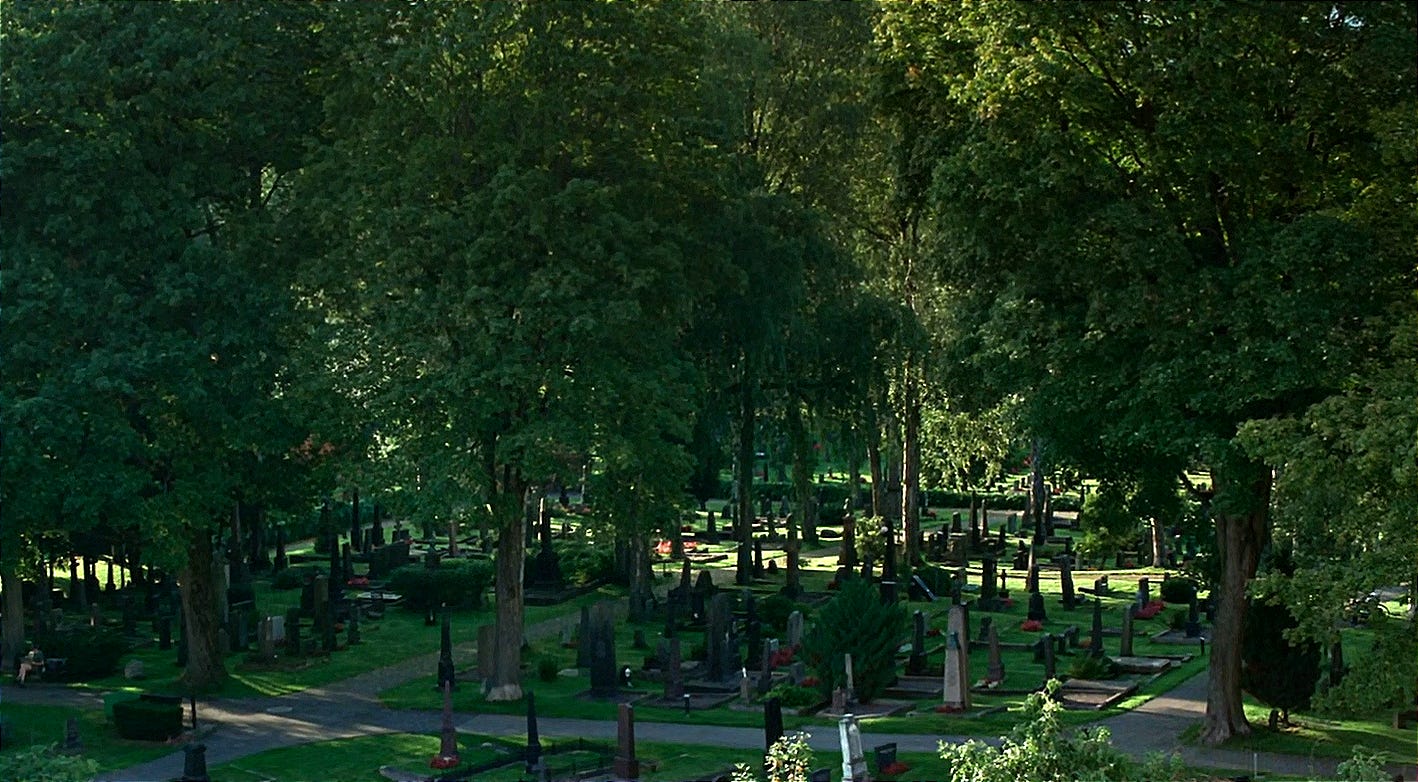
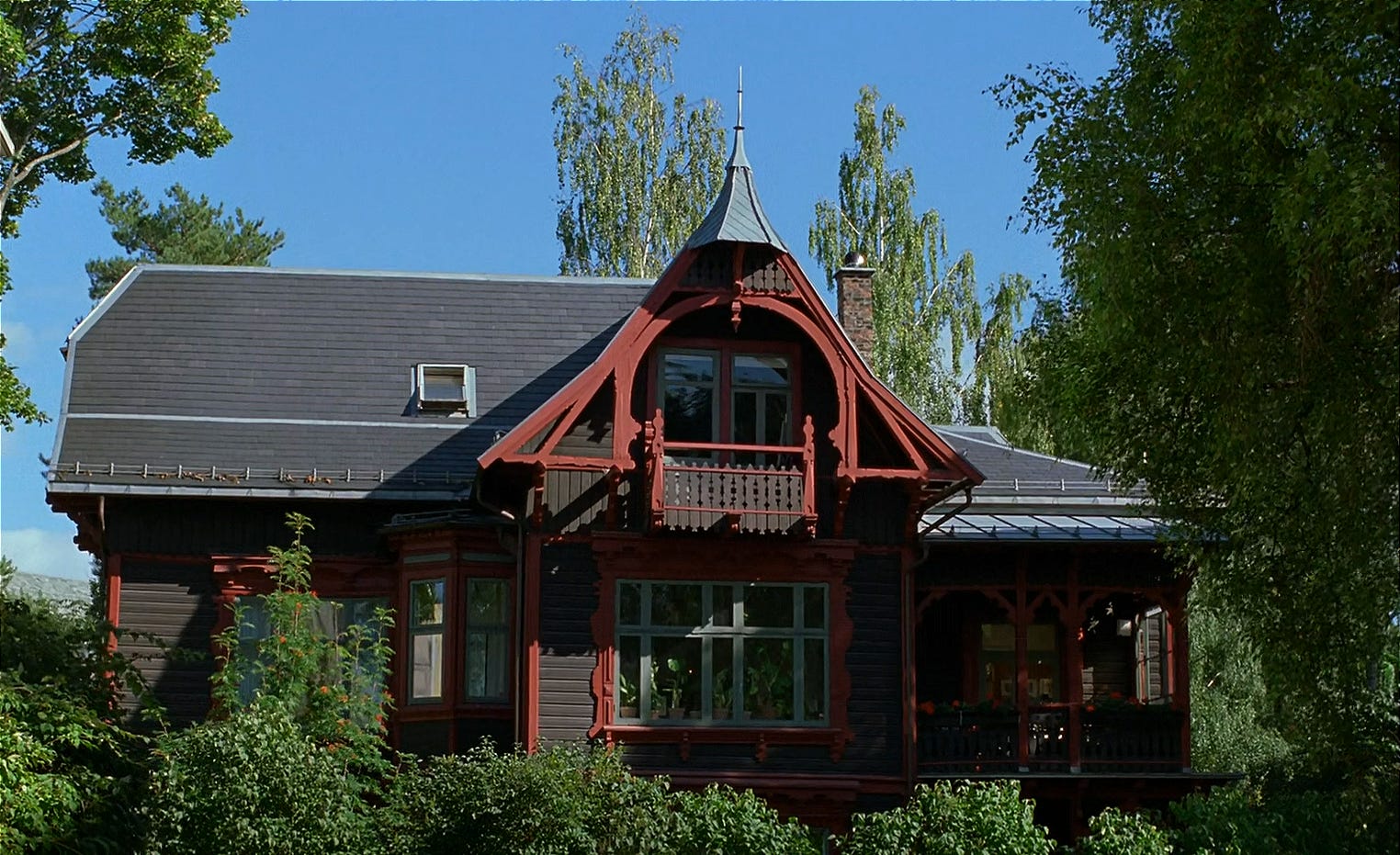
I rewatched Sentimental Value yesterday, and the film still remains to me as one of the closest and rawest portrayals of the extent of silence and noises of inheritance. This will be a film review, but also a diary on the matter, a memory testament that uses the excuse of the film to run through the spine of the matter, and rescue with it the feeling that combusted me as my century-old house went through a renovation more than a year ago. The following is a diary that I kept during those times, which are now layered with a very unorthodox film log.
☆
10/09/2024, Allahabad
It started almost instantaneously. By the time I woke up, the clouds had all wrapped around the sky’s boundaries, and the window through which I watched my childhood twice was broken into a spoiled piece of wood. The work had begun. I saw the walls like aged soldiers unable to fight further, their bones softened. I eyed them like they were already sent into the morgue, breathing out flaky dust.
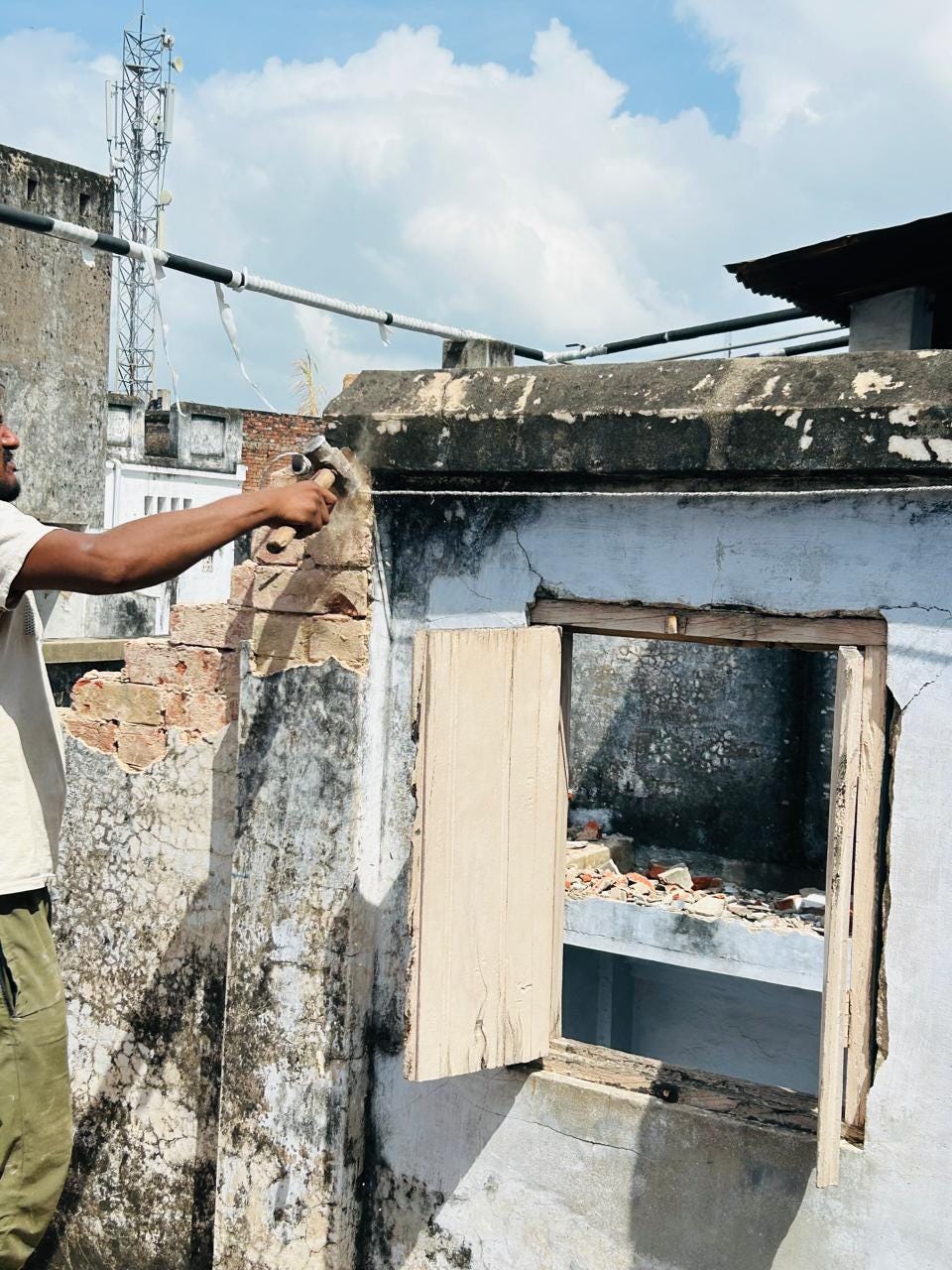
In sixth grade, Nora was asked to write an essay as if she were an object. An object has many sides; it is tangent, and becomes a vessel to carry the fragrances of our long-utilised body chemicals: fear, longing, grief, regret. In my law classes, we were told about immovable property. An immovable property includes land, things affixed to earth, or permanently fastened to anything affixed to earth. A house is an immovable property. It is not a stone or a camera, or a melting ice cream; it is something fixed on earth. Anything not fixed with earth can still be a vessel, but it cannot have earth as its witness. That’s how the memories lose grounding in the tangent self. In a smartphone, memories simmer up towards the ‘cloud’. Memory is usurped in you mechanically with algorithms. Revisit your photographs from your XX trip 4 years ago, it says in notifications. It flees from the memory, which Marcel Proust talks about.
Proust says memory is of two kinds. There is the daily struggle to recall where we put our reading glasses, and there is a deeper gust of longing that comes from the bottom of the heart, involuntarily, at sudden times, for surprising reasons.
Here is an excerpt from a letter Proust wrote in 1913:
We think we no longer love our deadbut that is because we do not remember them:
Suddenly, we catch sight of an old gloveand burst into tears
—Anne Carson
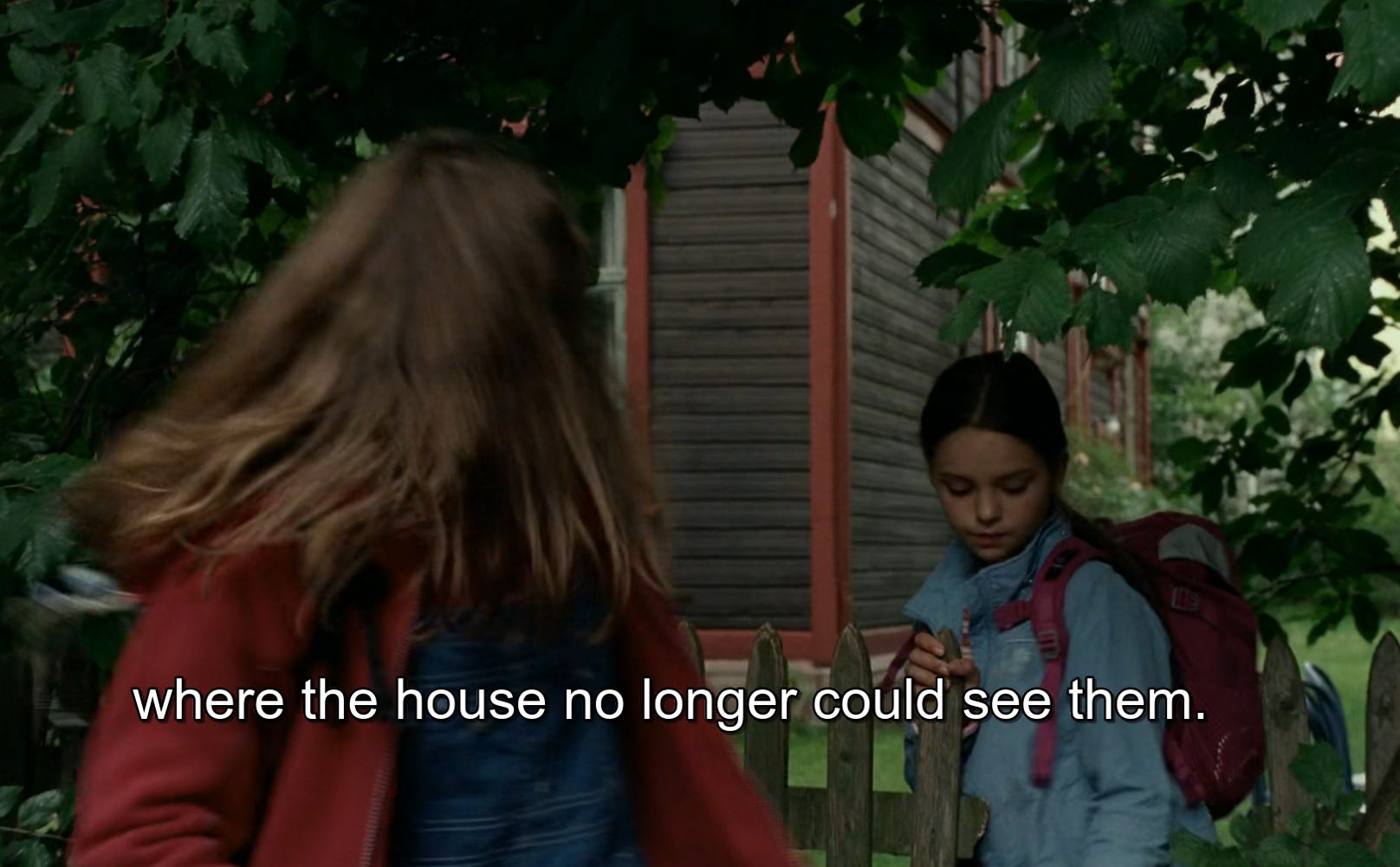
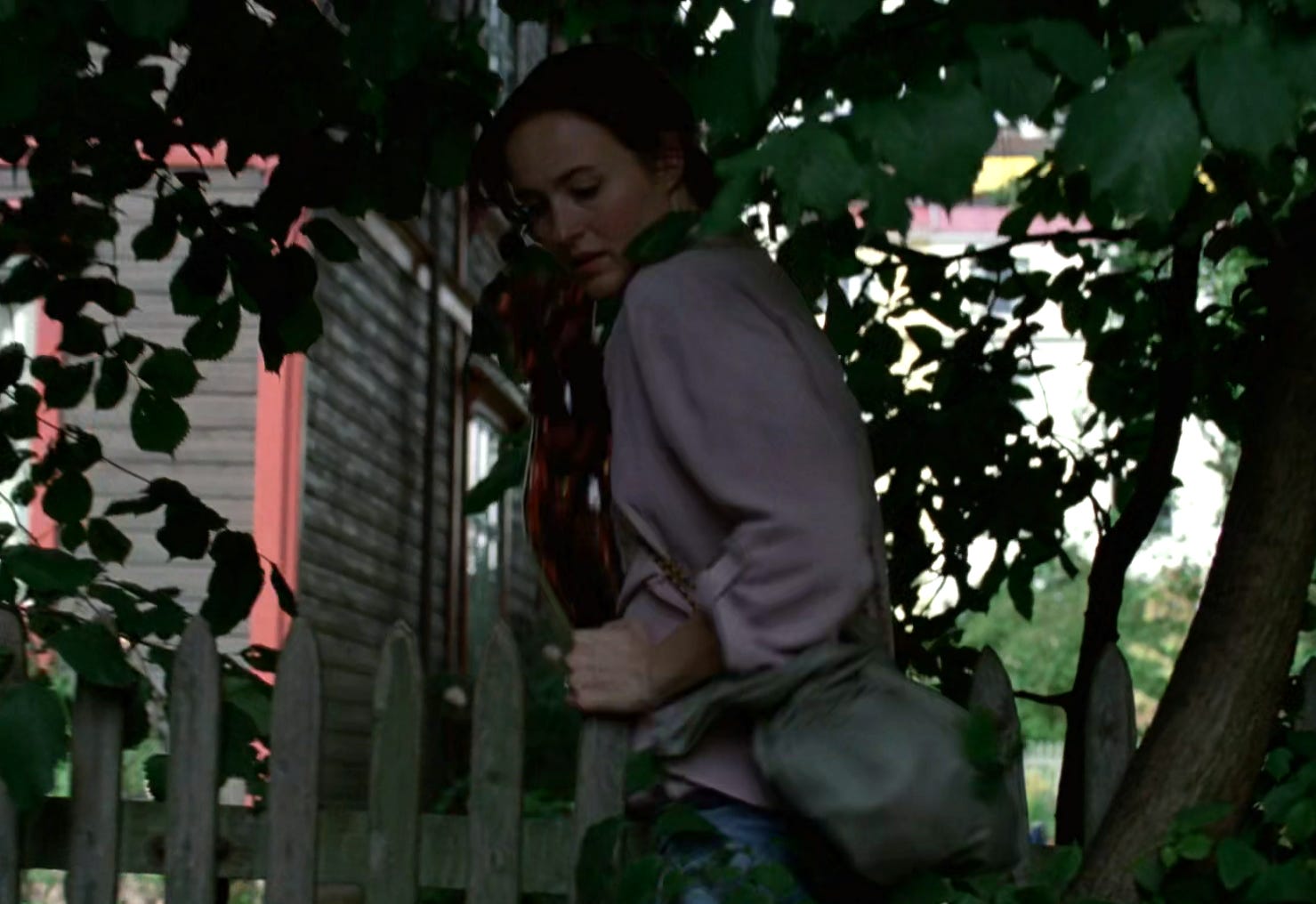
Whereas, a house holds wet memory. It seeks the lowest point, grates each stem of the house into a compulsive witness, reporting to the earth the shallow quakes of our life. The object Nora wrote about being, was her house. She described how its belly shook as she and her sister ran downstairs & out the back door. That it saw them as they took a shortcut through the broken fence and onto the road, where the house could no longer see them. Her house is of red woods, a smoky green spire, surrounded by thick green trees, bushes and shrubs. This vegetation blinds the outside world from what happens within, blinds the eyes of the building to where Nora flees. Somewhere in the wooden structure, there is a muted inscription of N, which has faded into a natural groove over time.
☆
11/09/2024
There is a static key that plays in my life. It has been pressed for a long time. The demolition of the walls just struck a beat at my cheeks and left. In an unsound void, I grieve as I accept.
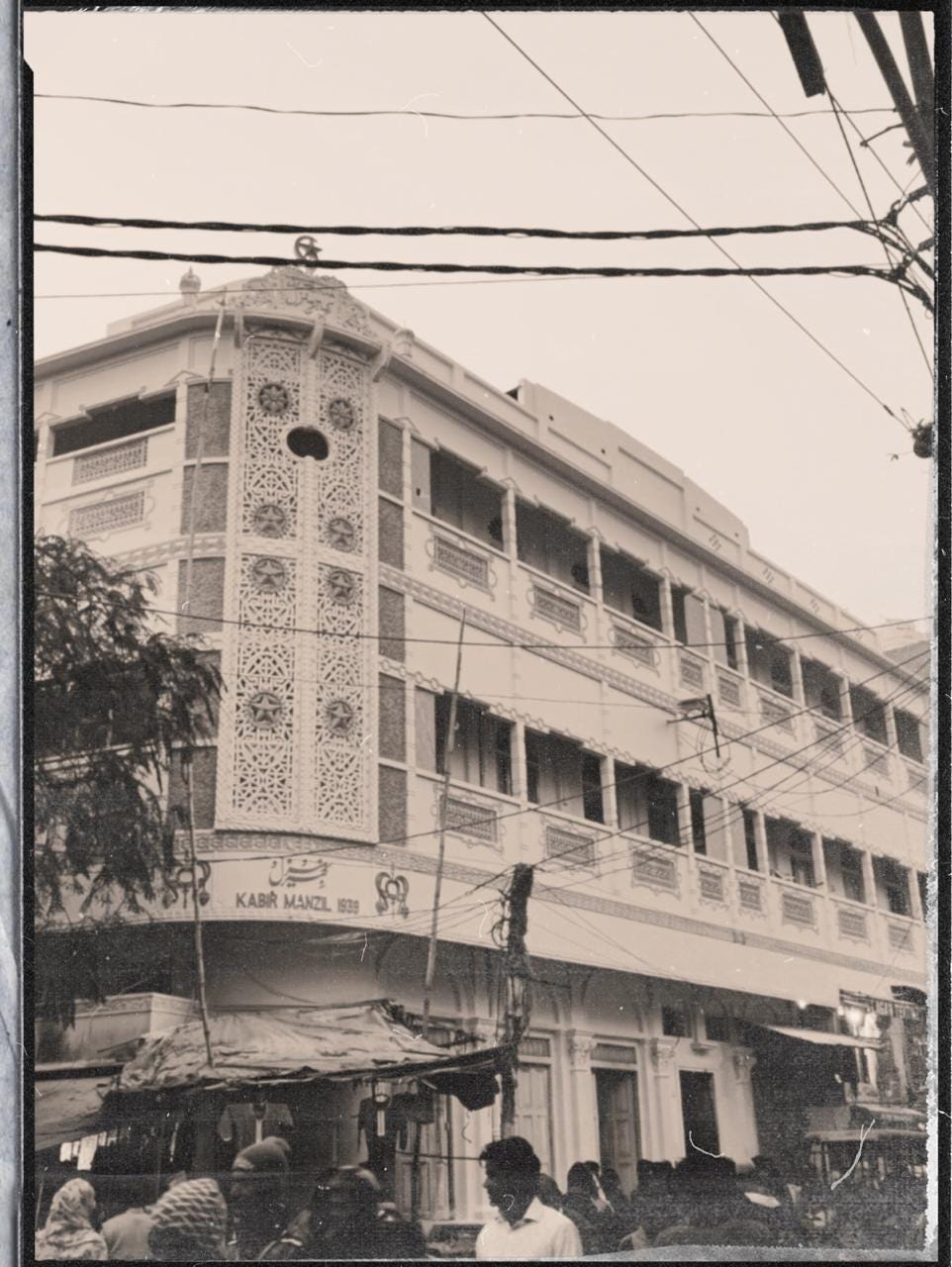
My house was built in 1928 by my great-grandfather, whose name was exactly mine. Its architecture came from Calcutta during the colonial period. The essential characteristic here is symmetry. High staircases separated by a thirteen-inch wall yet running parallel to each other, bifurcated the entire house. Two aangans (courtyards) on each side, four floors, and a basement where a market was made. Of these four courtyards, only two now remain, all evolving into brisk modern tentacles. Professor Abdul Wahid Alwakeel says, a house without a courtyard is like a man without a soul. According to him, the modern thinking of architecture revolves around functionality and not the metaphysicality of the structure. The predominance of a house is to be built around an open space that opens up to the sky, and makes you wonder. It is an interpretation of the macrocosm in private space, and that necessitates it.
I wonder if there’s an archetype within me, that I am disabling with the destruction of my childhood structures. I wonder if I would still dream of the older structures when in a dream I am a boy again.
Nora wondered if the house liked to be empty and light or full and heavy. If the floors liked being trodden on, if the walls were ticklish, if it ever felt pain. The house had been inhabited by other people before her, with other pets. Wooden planks being arranged for construction are shown in the next frame. Famous mystic Wolfgang von Goethe wrote, architecture is frozen music, and music is liquid architecture. Like abdominal fire, the bricks lurch up the sensuous region of our consciousness without there being an intermediary, just as music, it needs no translation. The music of Nora’s house is like you blow a breath from the entrance, and it goes on hopping to different rooms trying to elope, to find the ending and ends up being compressed in the instrument. The music is detuned, with inadvertent percussion and no chorus. There is only an echo. But if you notice more closely, it is only a recurrence somehow mistaken.
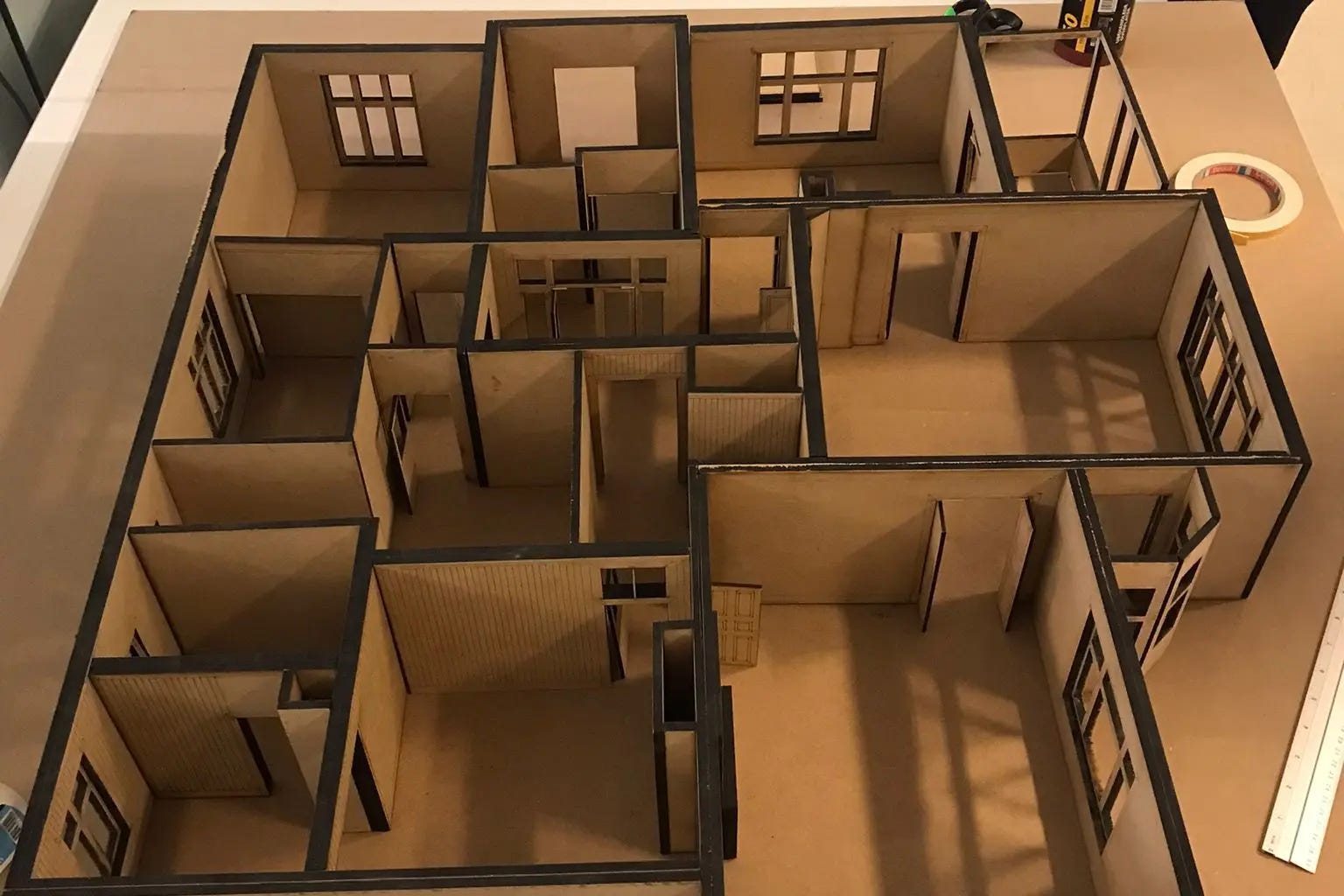
The music of my house is open, like a morning raga with multiple alaps. In my house there is a room where most of the deaths occurred. Somehow, that is like a station that falls upon the route of the Grim Reaper. In my time, I have seen two deaths there. When I was little, the Angel of Death was like the myth of Santa for me. Entering the room, I would imagine the vents it might come from and the escape route it will follow. The buzz each wall carried seemed like they reverberated a joke from decades ago. I have not seen this house as much as my father, but sometimes the house walks to me and whispers restlessness. We do not have the shrubs and bushes enveloping like Nora’s house, the structure stands bare, disciplined out by the chaos of the street.
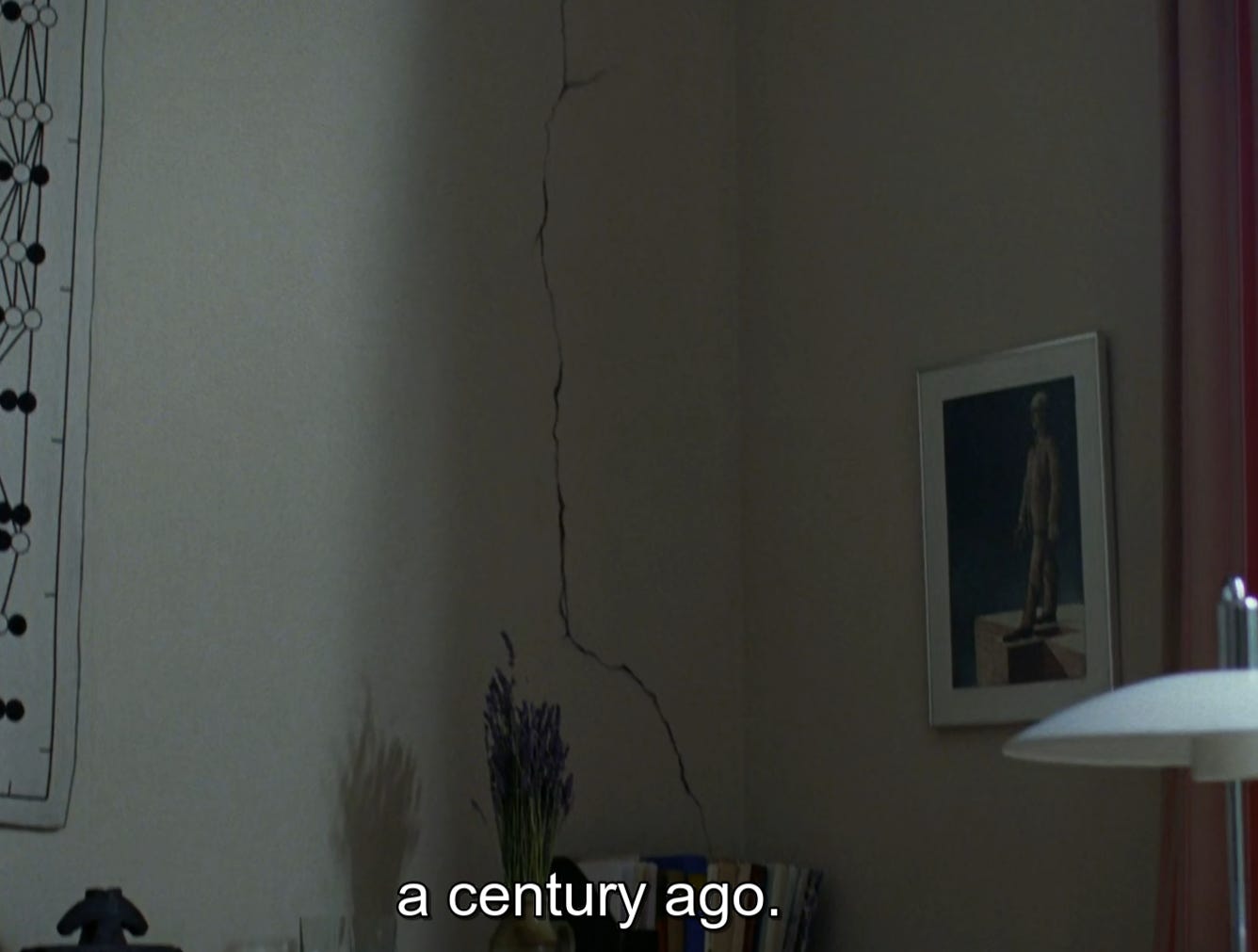
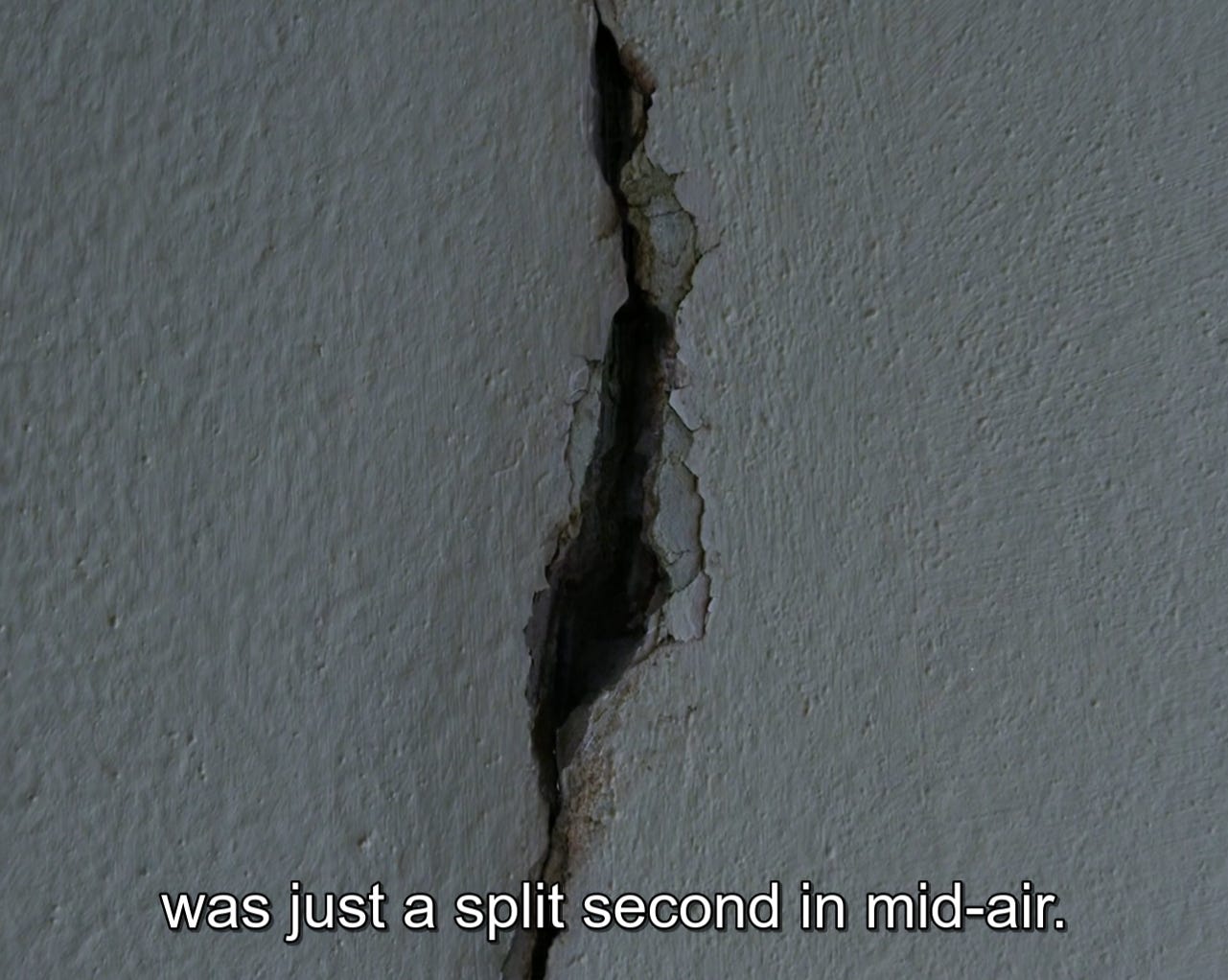
In the film, Nora’s father had told them that the house had a flaw discovered right after it was finished. There were cracks running up the walls. She wrote that it was as if the house was sinking, collapsing, only in slow motion.
A similar crack ran in our house, on the left portion when my father decided to devote the ground segment to the ultimate destiny of the area we lived in, which was soon to be a bustling market. I remember him telling me how everyone was scared that clamping the heavy house on a few metal rods would end up toppling every pillar to the street. Nothing toppled down. But the cracks erupted in every room, on the floors, in the monsoon, and the rainwater had started to seep down the living room. I remember having hallucinations as a child, waking up in the middle of the night, rushing to my parents’ room, chanting that the waters had all come down and were about to drown our bodies. This came with me everywhere. Last year, unconsciously, I woke my friend up in the flat and told him to hurry, that the water had started to arrive. He told me about that a day after, and I wondered if it was the obsession with water or the obsession with my house that made me act in those ways. Of course, the seeping water was not there for a long time; things were arranged, then the house got refurbished again. But the cracks allured me. Every opening became an opening within myself, with the grooves I fingered out from them, I was confident I had touched the part of the house nobody else had in years. I dressed them as my confidant, I would tell them all my secrets, and sometimes they’d cough in my ears.
☆
12/09/2024
I revel as I dream, and faintly quiver as I see it in front of me. I am love-tired and love-sick, I think too much— sometimes I think too little, but mostly I am an unsolved equation in the quadrant of stillness.
When the last batch of our family left after the partition towards Pakistan, they halted briefly at the structure which was taken down today. And they took a photograph. The wall, now covered in moss with scribbles of my sister’s names, was once clean as a bone, was once recognised by displaced bodies. Everyone in the photograph is now dead.
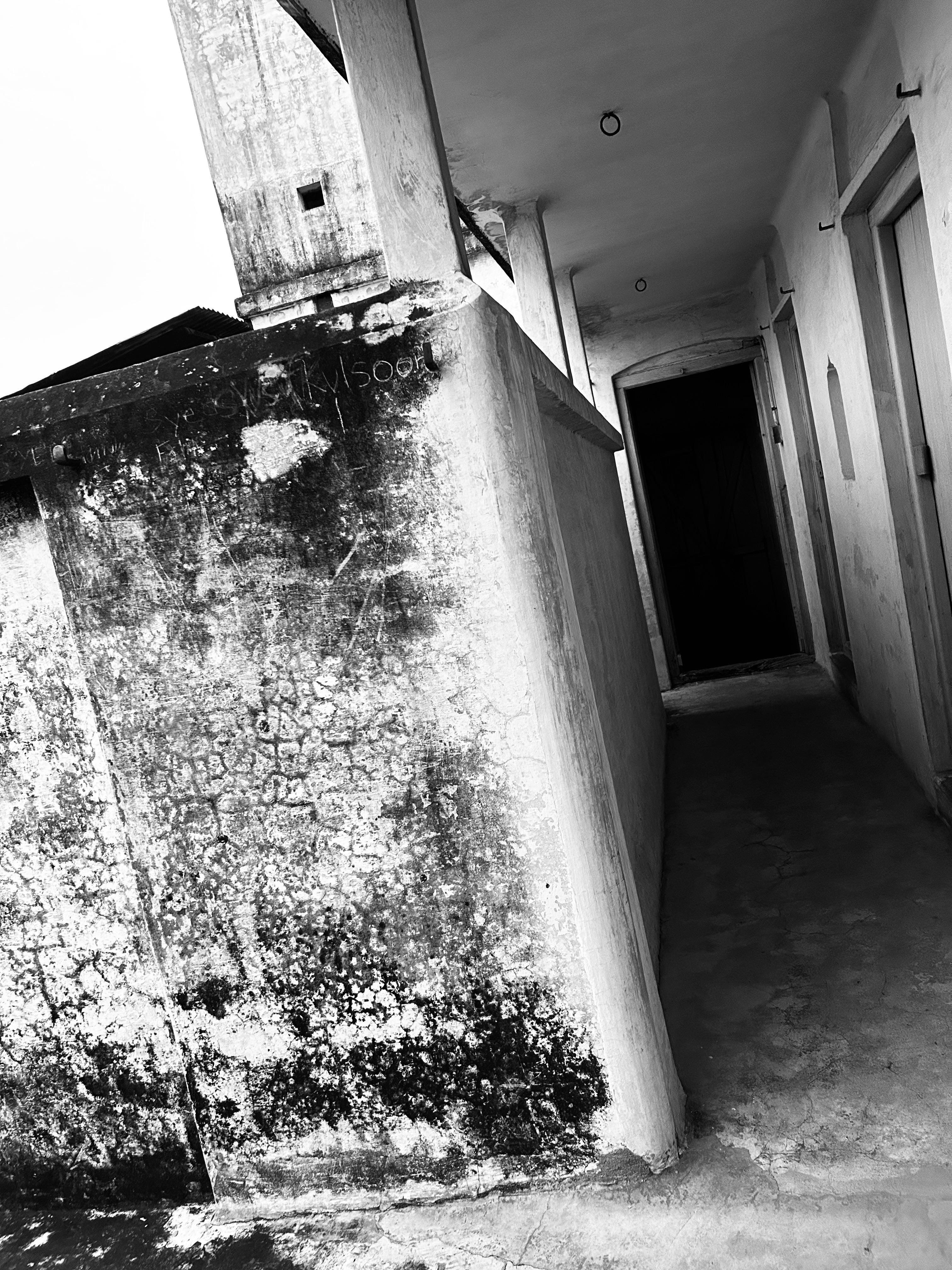
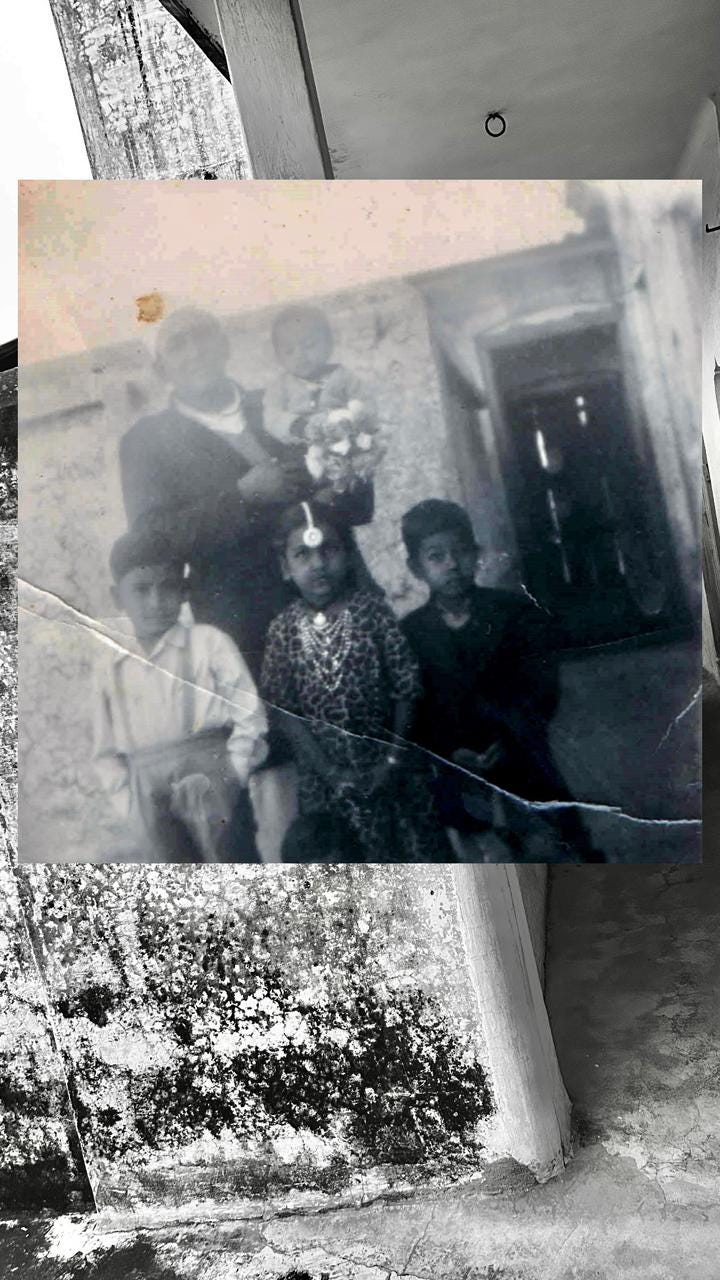
Any room on this floor that I wrote about in my diary gave out a grim feeling of being listened to. This is the face of the family that had seen a suicide. Much of the Daktar Sahab story I wrote on my Substack was fiction, except for this one element, which I had stolen from the life of my great-grandfather. His mother committed suicide when he was a small child. Following this, his father also disowned him. In a single year, he became an orphan. Throughout my life, although the talk is of the 1900s, I have tried to reach out to him through anecdotes by different relatives. In my lifetime, I had met one of his cousins who actually played with him since the cradle. Being a boy of eight, wearing shorts in the summer breeze, I’d run to her the moment I’d step in her house. And she, having zoomed her glasses in, would place those delicate dentures and say “Merey Kabban Bhaiyya Aagaye!”. (My brother Kabban is here.) Kabban. She’d call me Kabban because that is what she called him. His name was also Kabeer. Same as mine, yet vastly different. She’d tell me about their days, her love for him, and how he was the sweetest and himself to the fewest of his circle. This was different from how others portrayed him to me. Someone cold, principled, valiant to the world’s sufferings. I guess his helplessness was vented out by building structures all around the city, making estates, presenting himself poised and being ‘masculine’ and undeterred. Ofcourse he built himself, the wealth, the name, all by himself. But somewhere, all the perceptions I am reminded, Kabban also remains. This sensation of loss, of being emotionally un-resonant, became inherent to every member of the family down the line. My grandfather, my father, my uncle, my siblings. They all touch the fabric of their souls, sensing that they are always losing something; this fear breeds into the wombs, this shallow inability to express, this incantation of not being the wolf when the moon turns full.
In the film, something similar ran down Gustav and his daughters, Nora and Agnes. Gustav, the renowned auteur, lost his mother to suicide when he was seven. In the film, Gustav wants to create a film revolving around it, and he compulsively tries to cast his daughter (Nora) in it. When Nora rejects the offer, Gustav ends up casting a popular actress, Rachel Kemp, for the same role. He makes her dye her hair the same as Nora’s, makes her practice Norwegian, and gives out only a little about the film’s core, all because he cannot inhabit the feeling of being able to see nobody other than his daughter in the film, the same way he cannot shoot it in any other place than his own house. And Rachel could never possibly satisfy the emotional nakedness he wants, and this is something she realises from the moment he described to her the suicide scene of his mother, and showed her the room, the fake IKEA stool which became the medium. In one of the scenes, he is drunkenly swaying inside the house and looks intently at the door frame where graphite inscriptions had marked the height of Nora and Agnes for quite a few years. Gustav flirts with memory; he lets the uneasiness pass between him and Rachel as he compromises with his vision, until Rachel herself, after a time of realising it all, convinces him to let her move out of the script because of her inability to harness the turmoil around it. When that happens, Gustav is alone in the house— staring at the room where it all happened. He gets absorbed, he cries because he cannot be exonerated from this horrid chain of inexpressiveness.
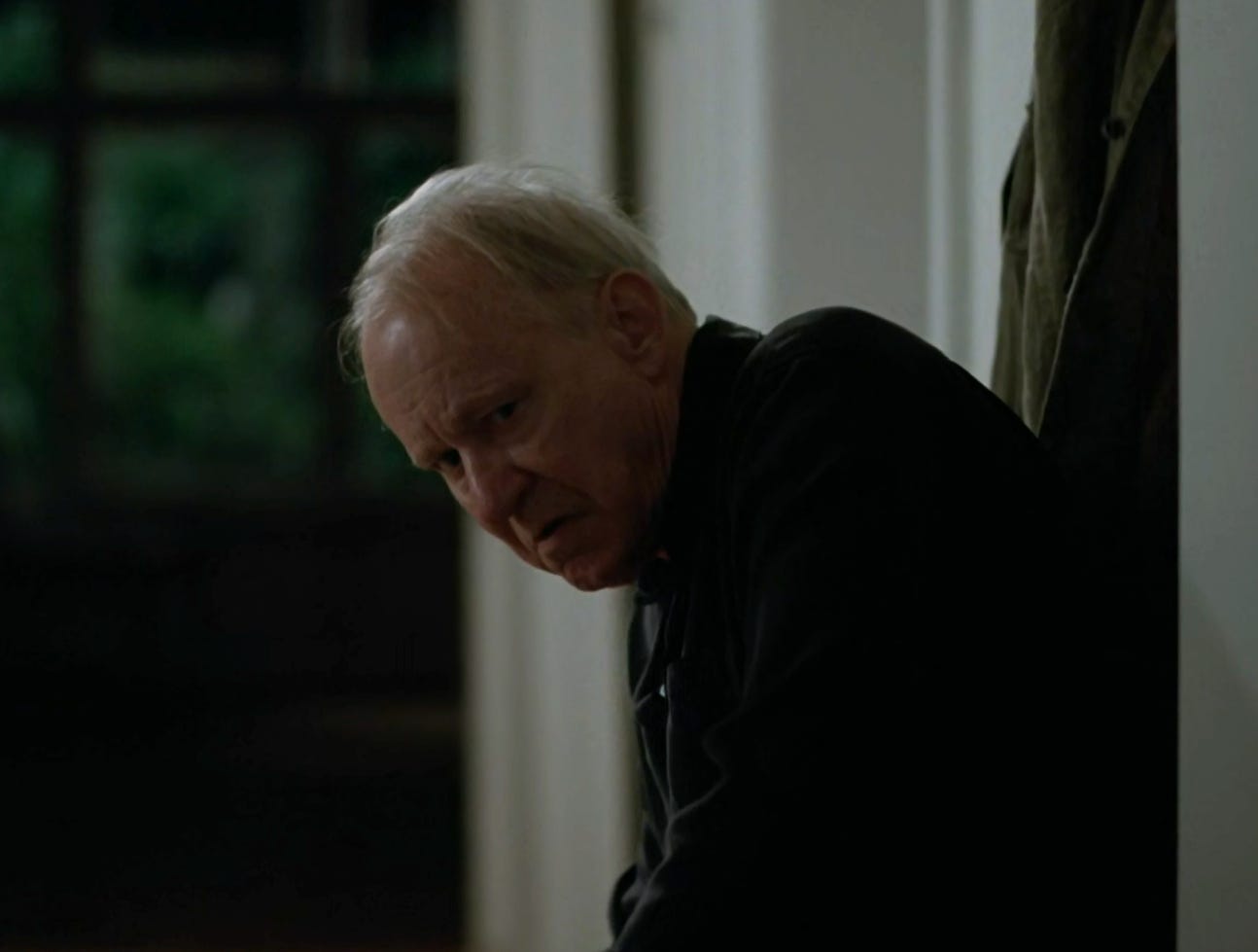
For Nora, this takes the form of emotional avoidance. The very first instance of this in the film is her trying to abandon her own theatre performance. We don’t know the exact reasons, but there is an intense emotional linkage to her being on the stage, to her inciting the act that alarms her into fleeing the scene.
Then the scene where she is in bed with a married co-worker, Jakob and asks him, “weren’t you about to leave?” because their whole setting had turned very “close and cuddly” He then goes on to ask, “Why are you so afraid of intimacy? I can tell it isn’t easy for you,” and she replies, “It’s perfect that you are married so I don’t have to confront how fucked up I really am.” Then, the scene where his little nephew whispers to her that he loves her and wants to marry her, and she laughingly refutes, but later gets overwhelmed and, in a brisk, poignant manner, leaves her sister’s house.
☆
20/10/2024
The doors of my room got painted. I don’t know how I feel about this.
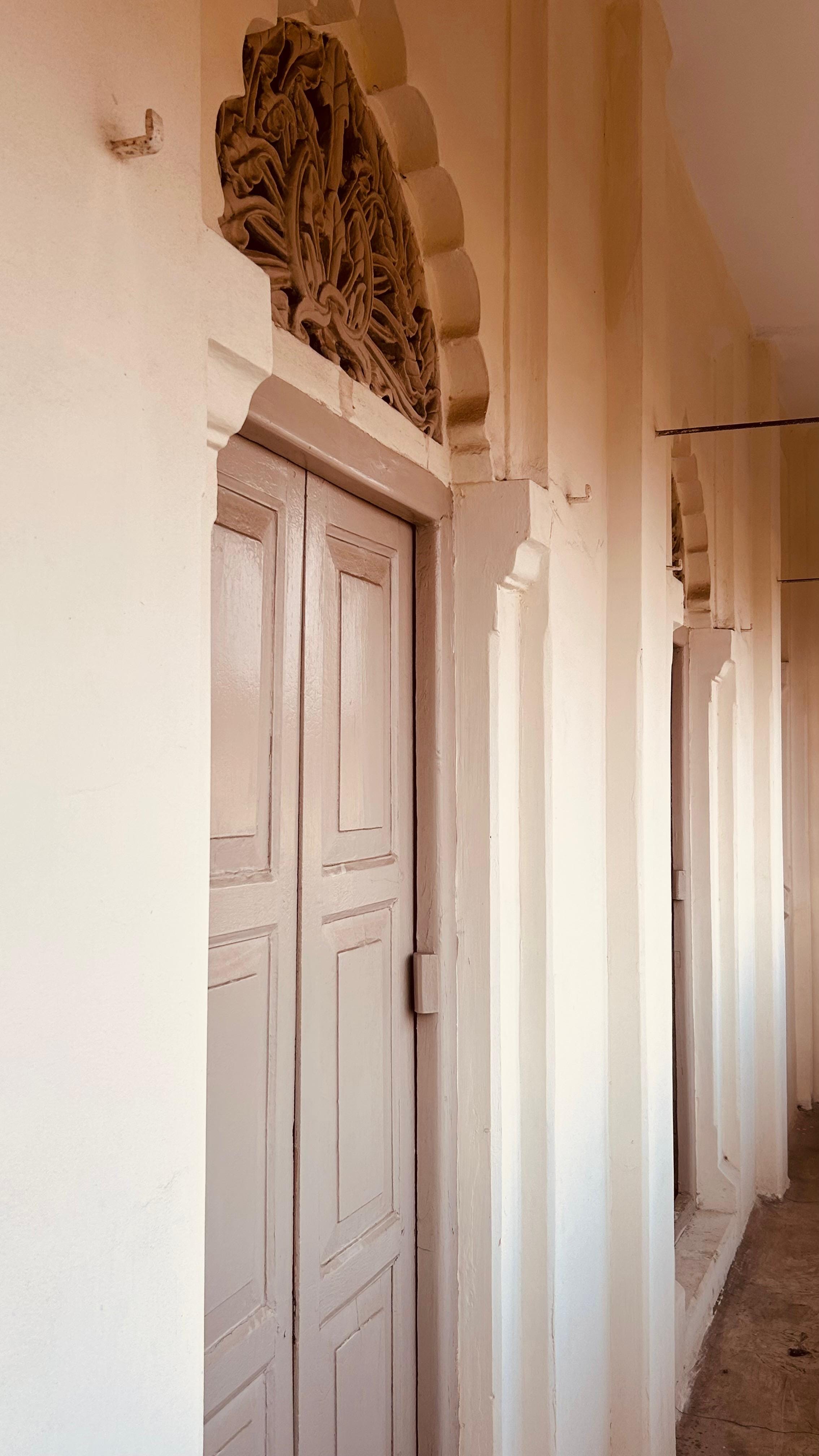
The room that I inhabit now was once off-limits for us, more so because it had another personal rooftop that ran from the room, which would spook us from the idea that there lived a dancing doppelganger on the stairs that ran towards the upper area. Although there had been many attempts at colonisation, each time the room was left alone with a layer of cosmic dust that turned the floor invisible.
In 2020, I got the room to myself. It used to belong to my grandfather, but was abandoned for almost twenty years. Certain parts of his life were told to us like parables, memoirs conjured through memories of others, almost like they encountered a myth they couldn’t place well enough in their heads and had to tell. Something about such people is that when everyone around them unknowingly has drained all the memory fragments, they start weaving more about them through alleged encounters in dreams. So much of him never ended, even after he passed away. Once in Ayman’s dreams, he was running by the patch of jasmine, running late for the prayer, and turned into a butterfly, and rose to the sun until you could only see the glow through his diaphonous wings.
It was something of a stimulus in our family to invoke him. When he got late in his life, he settled himself in the most secluded room on the roof. There are still his belongings in the room that nobody has the courage to move. Courage is a strong word; courage implies that there are still days when my father is battered out by the day, gazes weakly towards the room and forgets for a while that he had to be the one looking after everyone. Courage implies that nobody wants to pretend that they are no longer there. Still, his almirah, three of them are filled with his possessions neatly positioned. If you knew where something was kept, you could take it out even if you were blindfolded. If you didn’t know he was dead, you’d have long hours to understand he wasn’t.
Why does everything boil down to knowing? I know, unlike me, he was disciplined, careful of his space, and available in the moment. I knew from the very beginning that when I claimed his room to be my own, I had to face a vile ordeal of loneliness which he left for my share.
My room had four doors to enter. Like me, it cannot hold many. Nothing stays in my room for long. Four doors mean four ways to leave. When it became my room, I finally understood its relevance. In Monsoon, when you opened all the doors, it turned into a Palace of winds. And my sisters would gather here, their hair loosening with every swallow of the air that the courtyard took.
Now that I had gotten the room, I did not need words. I had a room, I could construct my own life, I thought. I stacked all my books in the room, gathered all the things I was spiritually connected with on my wooden desk. Glass bottles where the light glided unalarmingly, wooden boxes, perfume bottles with only scent and no application left anymore, limestone pieces, my grandfather’s portrait in a miniature frame, his painting container, and candles. Loads of candles and candle stands, some even archaic. I would buy cheap candles from Vemula and place around hundreds of those sticks all around my room. When the lights went out, and even when they didn’t, I would ignite their threads and dream about a phantom memory. At one point, I felt like Faust from one of my favourite painting by Carl Gustav Carus. I bolted two of Faust’s paintings on the wall with nails bruising the plaster. It was important for such an act to be done, It felt like I was pummeling that painting into my heart. Other things on my wall were all poetry, torn pages from my favourite books, architecture details, Middle Earth illustrations, and one prominent axis being the framed model of WB Yeat’s The Vision. A symbolic diagram where each quadrant represented the four faculties: The Will, The Mask, The Creative, and The Fate which moved through cyclic movements around a psyche on the pattern of phases of the moon. Only I know why it is in my room. For half my memory, I have been waiting for someone to notice it so I can ramble a lecture about it.
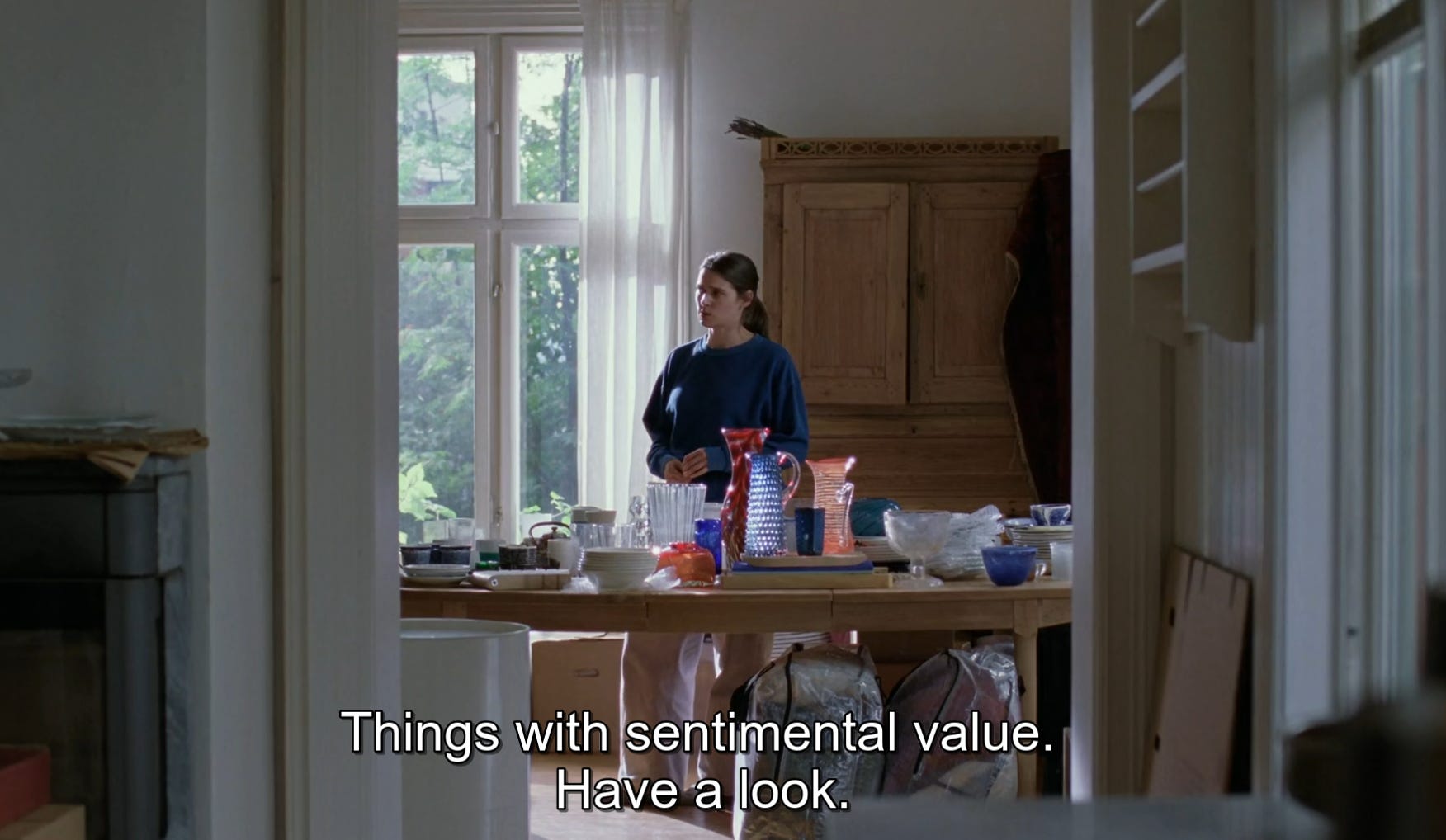
Amidst the film, Gustav takes over the house for his film set, and Agnes, the younger sister, vacates the space from the everyday objects that had inhabited in it. She sorts all the belongings in the dining room and asks Nora what she wants to keep. Nora says that Agnes should keep the things she likes and dump everything else. At this, Agnes presses that Nora should have a look around, that these things were of ‘sentimental value’, things touched by their childhood. For Agnes, being the younger one, it was easier for her to bond with these things, to grapple with a sentimental value with them, but for Nora, caught in the crossfire of the noises of the house, it reminded her each moment that whatever she held wasn’t hers, the wood she walked would’nt answer her back, the father wont stay for long. She couldn’t frame it inside her head that there were things touching, which you could touch the underbelly of something completely yours. Uncorrupted. Incorrigible.
Nora is oblivious, but she gives in to this domination and picks up a red vase to keep it. On hearing that her father has arrived, she then rushes out, but not without the vase. This is her attempt at courage. Here, the courage implies trying. She runs out of the house, taking the fence path. This is from where the house could no longer see her.
Later in the film, we have just the confessions, raw, visceral, sometimes hidden, sometimes groaning in the background, but always banding the wind instrument back to music again.
[Nora] Why didn’t our childhood ruin you?
[Agnes] It hasn’t always been easy for me.
[Nora] But you’ve managed to make a family. A home.
[Agnes] Yeah. There’s one major difference in the way we grew up…… I had you. I know you think you’re incapable of caring, ….. … but you were there for me. When mom was down. …… You washed my hair. …… Combed it. Got me to school. I felt safe. …
This film, in magical ways, brought me closer to recollections I had vainly ignored. We all run from intense emotionality; we wait for the strength to enter doors filled with people we know, waiting for someone to instead take us in from the out. But there is something, such as having an elder sibling to sustain all the tremors so you could learn to weep.
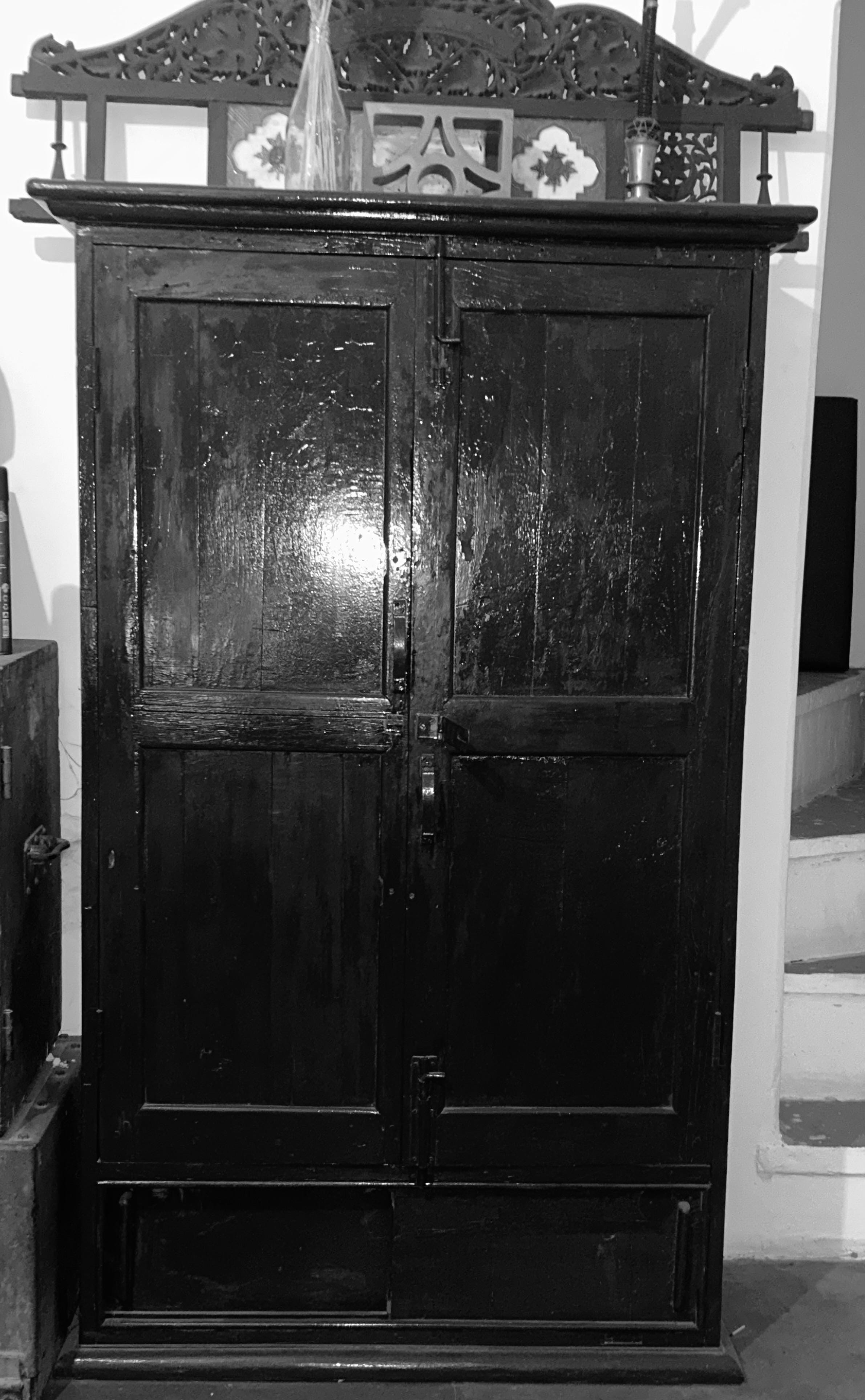
Of course, my sister did not believe she had been married for about half a year. She was Nora of the house. She had an almirah, which used to be the almirah of my grandmother. Made of sheesham wood, the colours had been changed multiple times. It was painted blue in the 1960s, and then again in peach in 2010, and finally in dark brown last year when she handed it over to me. I recall how, when she was giving it to me, I couldn’t register it. All these years, I had garnered a sentimental value with the almirah that I associated only with her, to house a million trinkets of her girlhood. She was unattached, almost numb to surrendering to me what had been the keepsake of her entire persona. After painting it in the new shades, and keeping the books inside, even now I feel like I am filling them in spaces where her objects still linger: her strawberry shortcake stickers, unread chicken soup papers, boxes, and more. Even her, I can still feel, present as a ghost, passing through the doors, pulling all the thorns from us still.
Even though she lives a completely different life now, after a fresh batch of rain, when squirrels— their furs dripping in the cloud’s ambrosia- tug on the electric wires on the street like clothesline clips, I hear the wind chime into the room like my sister, wounded from the sleep, slamming the door shut as the grey hues of atmosphere fade on the floor.
I watched the film only once. It shows that it is not the house that holds people; it is people who continue to live where they are no longer present. I also thought of the house as a moral agent, something that imposes modes of behavior, an emotional ethic, and regimes of silence and courage. What kind of person did this house train?
I also wondered whether there are objects that do not want to go on.
Every year, I reread To the Lighthouse by Virginia Woolf. What I continue to feel most strongly, reading after reading, is that the house does not preserve memories; it absorbs time, distorts time. Bachelard is also part of my rereadings, because he thinks of the house not as chronology, but as an inner rhythm...
for the last two days i have been reading this again and again even though ive never had a family home we were always travelling since i was young but i would dream of one all the time the kind that holds decades of sentimental value and yours is exactly that the pictures made me cry so beautiful